
My classroom environment is intentionally designed to promote accessibility, independence, and community. I use a variety of physical spaces and systems to support different types of learning and ensure that all students can engage meaningfully.
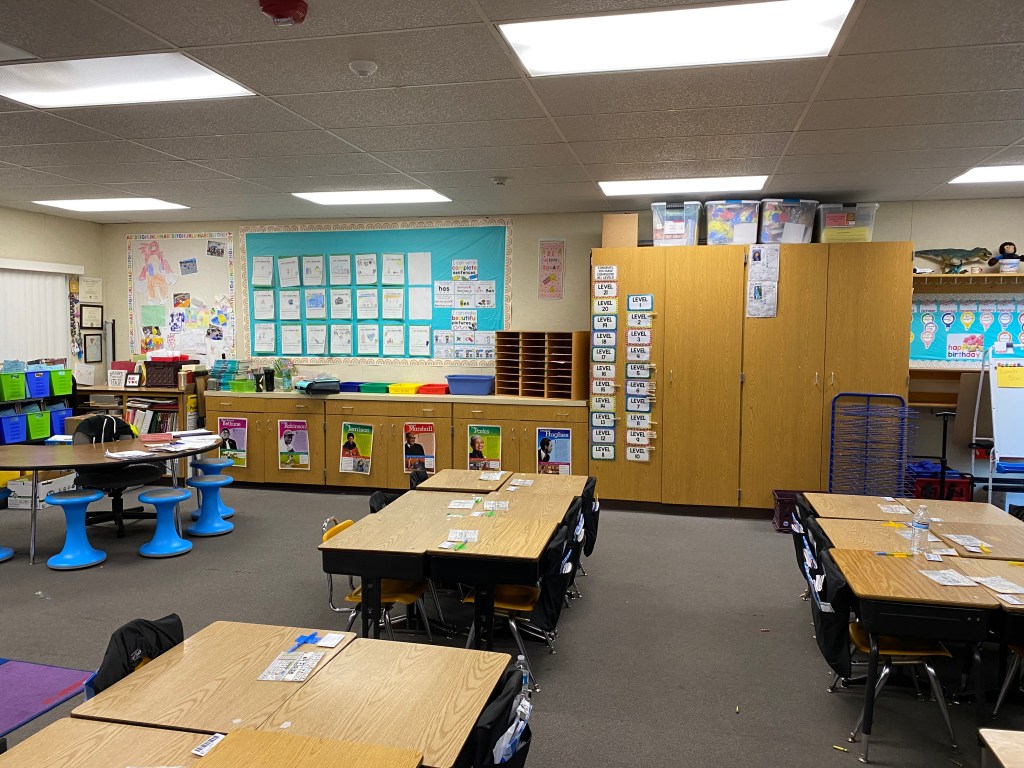
Students typically work in small groups for collaborative tasks and enjoy flexible seating or student choice seating during independent work. We gather in a shared central space for whole-class instruction and discussions. I strive to make every part of the classroom accessible, clearly delineated by function, and easy for students to navigate. My goal is to minimize teacher-centeredness and instead empower students to take ownership of their environment and learning.
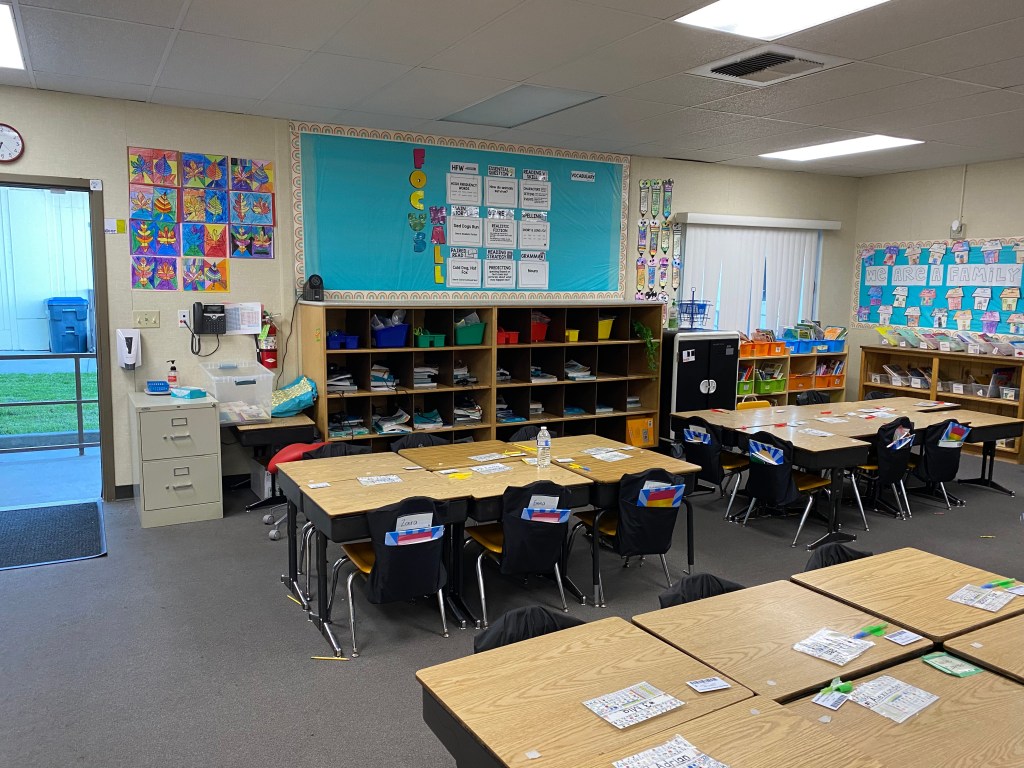
To support independence, I attach student nametags to small, reference anchor charts attached to their desks with Velcro—including number lines, 100 charts, left/right visuals, and sight words. Students can detach and take them to their workspaces during independent tasks. This small system has made a big impact on student confidence and self-direction.

I also incorporate creative routines to promote self-management and positive reinforcement. For example, I tape color-coded smoothie straws to desks as pencil holders. If students have a sharp pencil available, the “Pencil Fairy” might leave them a small treat or note—an incentive that turns personal responsibility into a fun, motivating moment.

To support smooth routines, I use table-group turn-in bins, seat pockets (in past classrooms), and a single rotating daily helper system—an efficient alternative to traditional class jobs that ensures everyone gets a chance to contribute. I post unit objectives on the wall and write lesson objectives in kid-friendly language on the board so students understand the purpose behind our work. Our student-created Class Agreement remains posted all year and is referred to frequently.

I’ve spent the past six years building a large, diverse classroom library with picture books, chapter books, graphic novels, and popular series. I want students to feel excited about reading and have regular opportunities to practice selecting “just right” books. Around the classroom, I post expectation anchor charts and intentional, inclusive decorations that create a warm, welcoming space without overwhelming students.
One of my favorite features is the community art wall behind my desk, where students are invited to contribute drawings, notes, and creative pieces. It’s a small but meaningful way to build connection and joy into our shared space. I also display data-tracking visuals strategically—visible for goal-setting, but always with sensitivity to all learners, ensuring that success feels personal, not performative.
 jessica-lawson.com